Data Engineering Services
Scalable Data Foundations for AI-Driven Enterprises
Struggling with data silos across enterprise systems?
As enterprises expand across cloud, SaaS, and on-premises environments, data often becomes fragmented across platforms. We unify disconnected sources into a centralized, governed data layer that improves visibility and enables consistent analytics and AI outcomes.
Is poor data quality affecting reports and AI outcomes?
Inconsistent and duplicate data can impact reporting, forecasting, and AI performance. We implement validation, cleansing, standardization, and governance frameworks to deliver trusted, AI-ready datasets across enterprise systems and pipelines.
Legacy pipelines preventing access to real-time data?
Legacy pipelines often introduce delays, reliability issues, and limited scalability. We modernize batch and streaming pipelines with scalable architectures, automated monitoring, and resilient processing frameworks to support real-time insights.
Enterprise Data Engineering Solutions, Built for the Age of AI
According to Forrester’s Data Culture And Literacy Survey, more than one-quarter of global data and analytics employees estimate their organization loses more than $5 million annually due to poor data quality, and 7% say the loss is $25 million or more. Modern enterprises generate vast volumes of data — but without strong engineering foundations, it stays fragmented, slow, and unreliable. Broken pipelines, siloed systems, and poor data quality don't just slow analytics; they put AI investments at risk.
LevelShift's Data Engineering CoE helps enterprises close that gap — delivering data engineering consulting services and solutions built on Microsoft Fabric, Azure, and Databricks, with structured frameworks and accelerators that turn fragile data infrastructure into a scalable, trusted foundation for analytics and AI.
Schedule a Call
Our Data Engineering Services
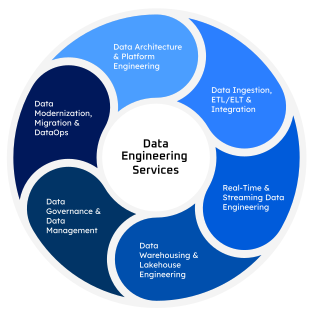
Data Architecture & Platform Engineering
Data Ingestion, ETL/ELT & Integration
Real-Time & Streaming Data Engineering
Data Warehousing & Lakehouse Engineering
Data Governance & Data Management
Data Modernization, Migration & DataOps
Talk to the experts who build data foundations enterprises rely on.


Implementation Roadmap
Discovery and Data Source Profiling
Architecture Design and Technology Stack Selection
Environment Provisioning and CI/CD Setup
Data Ingestion and ETL/ELT Pipeline Build
Storage Optimization and Query Performance Tuning
Production Deployment, DataOps and AIOps Enablement
Medallion-Based Data Modernization for a Global Tire Manufacturer
For the world's largest tire manufacturer, fragmented partner data across 8 incompatible formats and no central reporting system created blind spots across a vast global distribution network. By building a unified, 3-layer data architecture on Azure Logic Apps, Azure Data Factory, and Databricks, surfaced through Power BI, partner sales and inventory data was consolidated into a single governed platform with self-service analytics at scale.
Read the full story80% Improved decision-making
Real-time, accurate inventory and sales data enabled faster, more confident forecasting across the partner network.
50% Decrease in reporting costs
Consolidated 8 incompatible data formats into a single platform, empowering teams with self-service analytics and eliminating manual overhead.
1 source of truth for all partner data
A Bronze to Silver to Gold architecture standardized and curated partner structure and KPI data, replacing siloed, incompatible systems.
Why LevelShift
- Azure and Databricks-powered data engineering frameworks and accelerators
- Expertise in enterprise data platform, warehouse, and ETL modernization
- 100+ data engineering and modernization projects delivered
- Specialized Partner for Azure Data Warehouse Migration



Where are you in your Data Transformation Journey?
Learn More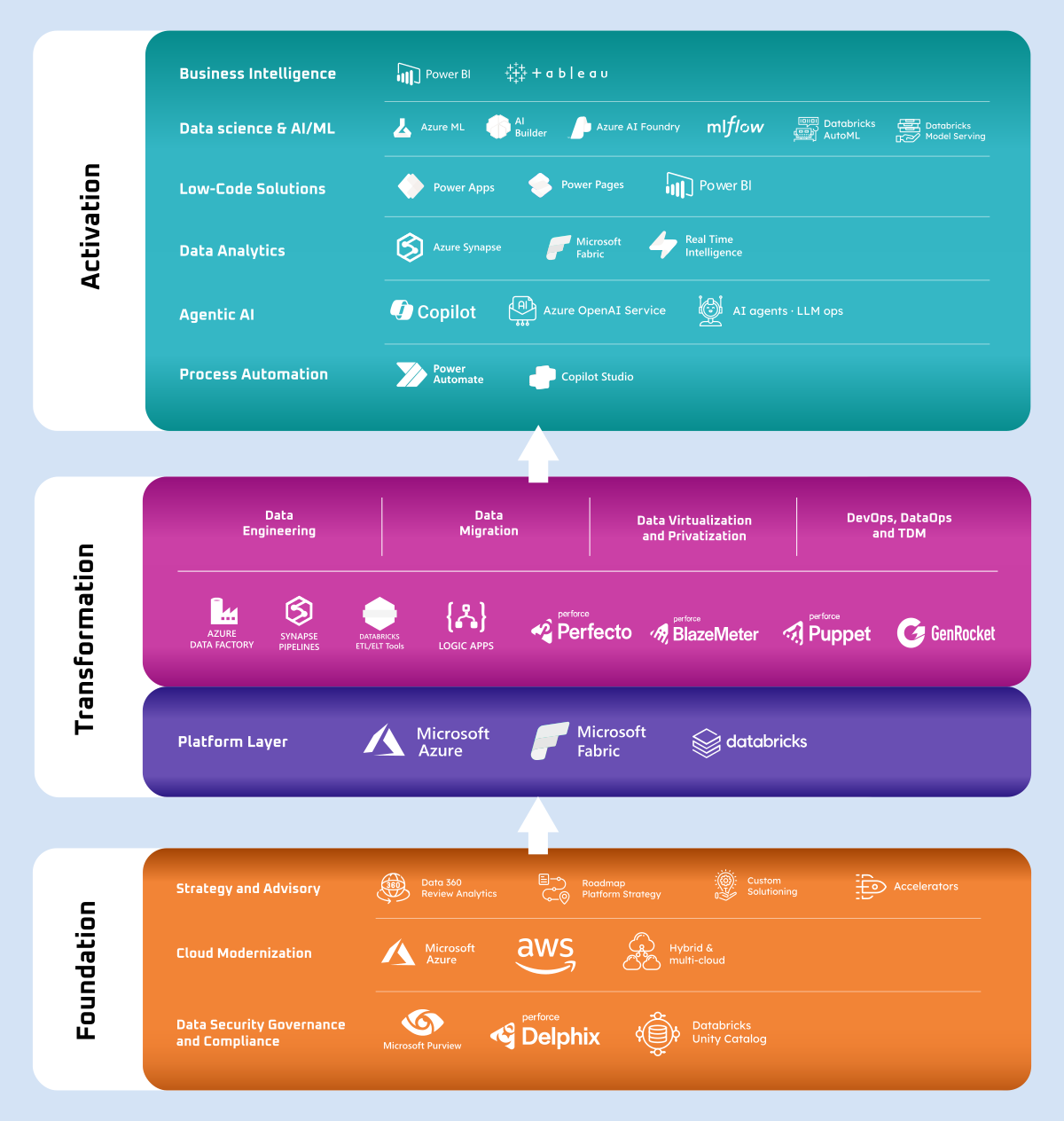
FAQs
Core capabilities span five areas: data ingestion and integration (ETL/ELT, CDC, streaming via Databricks Auto Loader or ADF); data quality and cleansing (profiling, validation, Delta Live Tables); transformation and processing (Spark, dbt, batch and real-time); storage architecture (data lake, warehouse, lakehouse, Delta Lake); and orchestration and DataOps (CI/CD, lineage, monitoring via Databricks Workflows or Airflow).
LevelShift Data Engineering Consulting Services deliver comprehensive expertise across all five areas to help enterprises build scalable, reliable, and AI-ready data foundations.