Data Analytics Services
Accelerate speed to insight with advanced analytics and AI-powered insights
Is your data foundation limiting the impact of your analytics initiatives?
Disconnected systems, inconsistent pipelines, and poor governance lead to unreliable insights and low trust in analytics outputs. Modern data engineering practices are critical to building scalable, analytics-ready foundations for high-performing workloads.
Are legacy architectures restricting access to real-time insights?
Many enterprises still rely on batch-based architectures that delay insight delivery and slow decision-making. Real-time analytics requires modern data pipelines, streaming capabilities, and low-latency processing built for continuous insight generation.
Are your AI-powered analytics initiatives struggling to scale beyond pilots?
Many AI analytics initiatives stall due to poor data quality, limited trust in model outputs, and infrastructure not designed for AI workloads. Scaling AI analytics successfully requires the right data foundation, governance, and operational alignment.
Accelerate speed to insight with advanced analytics and AI-powered insights
Modern enterprises need more than dashboards and historical reporting. They need real-time analytics, predictive insights, and decision intelligence that help teams respond faster, forecast accurately, and uncover new growth opportunities. Gartner predicts that by 2027, 50% of business decisions will be augmented or automated by AI agents for decision intelligence, accelerating the shift toward AI-driven analytics across the enterprise.
We help organizations modernize analytics capabilities with Microsoft Fabric, Azure Synapse, Databricks, and AI-powered data analytics solutions that enable advanced analytics, customer analytics, forecasting, and ML-powered insights at enterprise scale.
Schedule a Call
Our Data Analytics Services
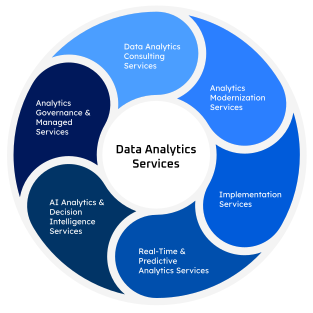
Data Analytics Consulting Services
Analytics Modernization Services
Implementation Services
Real-Time & Predictive Analytics Services
AI Analytics & Decision Intelligence Services
Analytics Governance & Managed Services
Talk to our experts who build scalable, AI-ready analytics ecosystems.


Our Implementation Roadmap
Requirement Gathering and Data Assessment
Analytics Architecture and Tooling Design
Data Modeling and Pipeline Engineering
Dashboard and Report Development
Advanced Analytics and AI Integration
User Adoption, Training, and Analytics Governance
Seamless SAP Data Integration for Real-Time Analytics with Fabric
A diversified Kuwaiti holding company operating across industrial, hospitality, education, and real estate sectors modernized its SAP data architecture to improve analytics readiness and reduce reliance on manual reporting processes. By implementing a secure SAP-to-Microsoft Fabric integration framework, we established a scalable foundation for real-time analytics, enhanced data models, and enabled Copilot-driven analytics to support faster, data-driven decision-making.
Read the full story100% Connectivity Enablement
Full connectivity enablement between SAP and Microsoft Fabric environments.
60% Faster Integration Readiness
Faster integration readiness for analytics workloads.
50–70% Reduction in Manual Data Dependency
Reduction in manual data dependency for reporting and analytics.
Why LevelShift
- Microsoft Solutions Partner and Specialized Partner for Data Analytics and Warehouse Migration
- 100+ Data Analytics and Business Intelligence projects delivered
- Winner Top 10 Data and Analytics Team Awards

Where are you in your Data Transformation Journey?
Learn More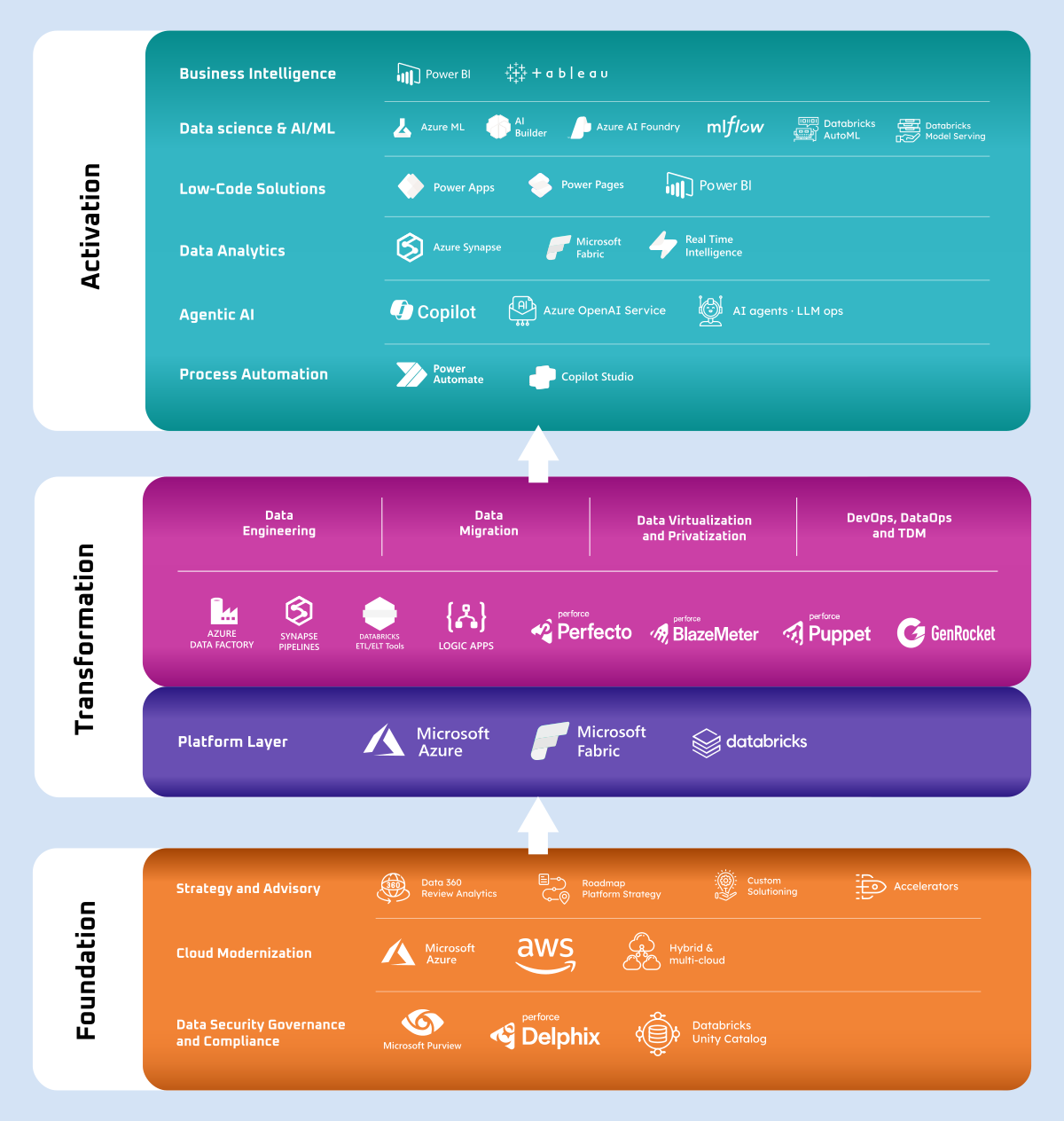
FAQs
- Big Data Analytics: Process massive volumes of structured and unstructured data at scale. We uncover hidden patterns, correlations, and trends across petabytes of information, turning data complexity into clear business intelligence.
- Predictive Analytics: Forecast future outcomes using advanced statistical models and machine learning. Anticipate customer behavior, market shifts, and business opportunities before they happen—moving your organization from reactive to proactive.
- Real-time Analytics: Monitor and analyze data as it flows. Get instant visibility into operations, customer interactions, and market conditions. Detect anomalies immediately and respond to critical events in real-time with maximum agility.
- Performance Analytics: Track the metrics that drive business success. We deliver dashboards and reports that measure operational efficiency, reveal revenue drivers, and align teams around data-driven goals and continuous improvement.
- Diagnostic Analytics: Discover the “why” behind your data. We drill into root causes using correlation analysis and data mining to diagnose issues, validate hypotheses, and develop targeted solutions that address core challenges.