Dreamforce 2026 put a fundamental question at the centre of the conversation: What happens when AI moves from generating answers to actually doing the work?
In Marc Benioff’s main keynote, Salesforce explored this through its vision of the Agentic Enterprise, where people, AI agents, trusted data, and business applications work together. The focus was not simply on building more capable AI models, but on making that intelligence useful within the systems, processes, permissions, and business context that keep an enterprise running.
For LevelShift, this has direct relevance across Sales, Service, and Marketing. But the bigger story is how AI is changing the way people interact with enterprise technology.
From Probabilistic Intelligence to Administrative Action
One of the keynote’s central themes was the relationship between probabilistic AI and deterministic enterprise systems.
AI models are probabilistic by nature. They reason from patterns and probabilities to generate responses, recommendations, and content. But a model alone does not necessarily know which customer record is authoritative, which business rule applies, whether it has permission to take an action, or when a request needs human intervention.
Enterprise applications provide that other layer: structured data, workflows, permissions, validations, and business rules.
Salesforce’s vision is to bring these two worlds together.
This changes how an agent responds. A probabilistic response focuses on what the model determines is the most likely answer. An administrative response takes into account the rules, data, permissions, and workflows that determine what can and should happen within the business.
A service agent, for example, should not simply provide an answer that sounds correct. It may need to check a customer’s history, entitlement, or service policy before determining the appropriate action.
The objective is not to eliminate probabilistic reasoning. It is to ground that reasoning in the controls and context of the enterprise.
The Trusted Enterprise AI Harness
This idea underpins Salesforce’s Trusted Enterprise AI Harness, which brings AI models and agents together with enterprise data, context, actions, governance, security, and control.
The approach recognizes that model capability is only one part of deploying AI at scale. Agents also need reliable information, an understanding of business processes, appropriate permissions, and mechanisms for governing and monitoring their actions.
The question therefore shifts from What can AI do? to What should AI be allowed to do, under what conditions, and where should people remain involved?
When the Interface Stops Being the Application
Another important theme at Dreamforce was the changing role of enterprise software.
Traditional enterprise software requires users to navigate applications, find information, complete tasks, and move through predefined workflows. Agentic AI changes that interaction. Instead of navigating every step themselves, users can increasingly describe an outcome and allow an agent to work across the underlying systems.
This does not make enterprise applications less important. It makes their data, business logic, workflows, permissions, and actions even more important, because they become the foundation on which agents operate.
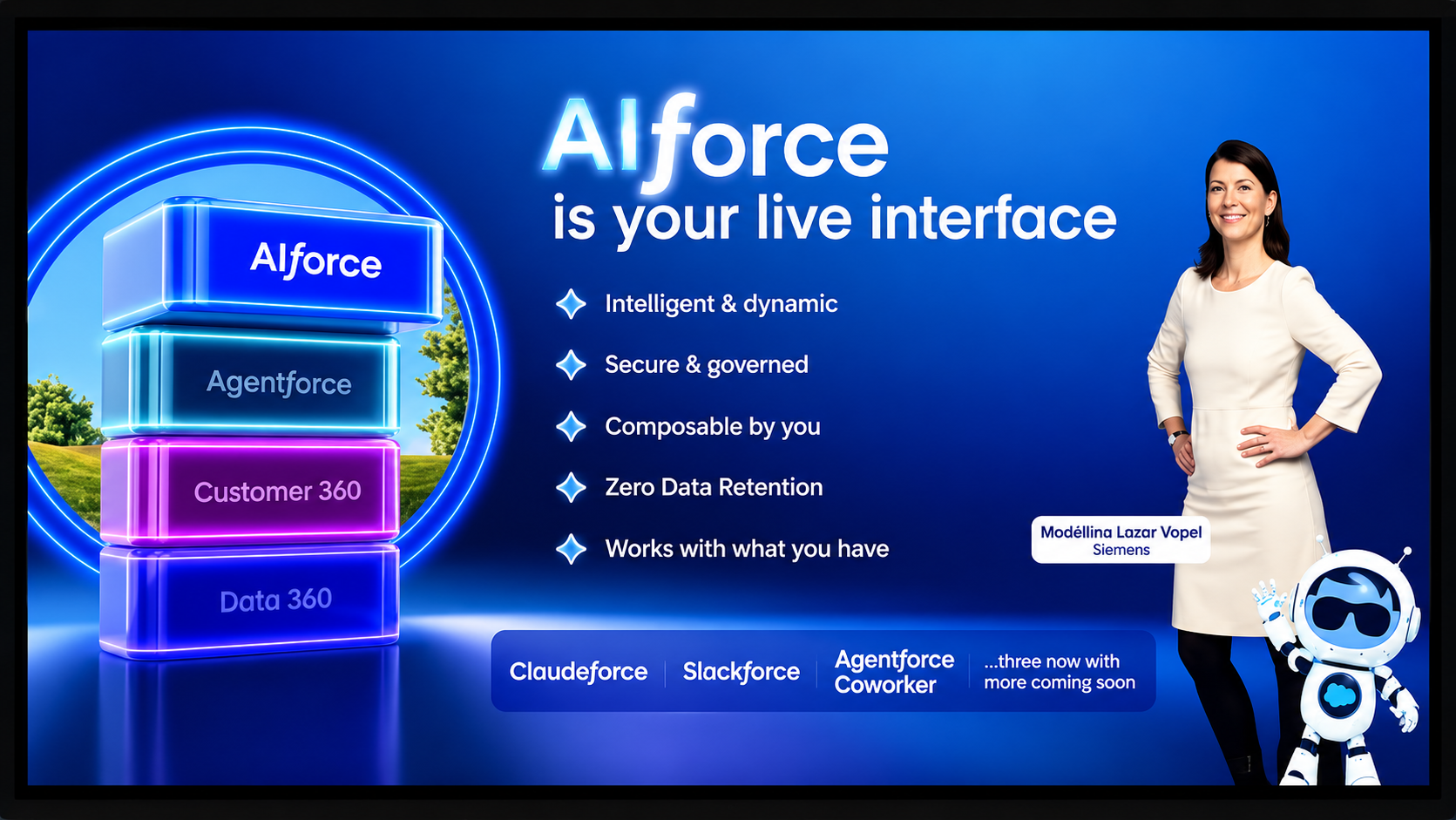
That shift was reflected in Salesforce’s announcements around AIforce, Claudeforce, Slackforce, and Slack Code.
AIforce: Bringing Salesforce Intelligence to Any Interface
AIforce represents Salesforce’s push to bring Salesforce data, business logic, workflows, actions, security, and governance into the interfaces where people and agents work.
Instead of requiring every interaction to happen through a traditional CRM interface, Salesforce is moving toward experiences where users can access enterprise intelligence in a way that is more closely aligned with the task they are trying to accomplish.
The underlying Salesforce platform remains important because it provides the trusted context and controls around those interactions.
Claudeforce: Connecting Claude to Enterprise Context
Salesforce’s partnership with Anthropic adds another dimension to this approach.
Claudeforce connects Claude’s reasoning capabilities with Salesforce data, business logic, workflows, actions, and governance.
The significance goes beyond adding another model to the Salesforce ecosystem. It reflects a broader approach in which organizations can use different AI models while maintaining enterprise context and controls around how that intelligence is applied.
The model provides reasoning capability. The enterprise platform provides the context, data, permissions, and actions that make that reasoning useful in a business environment.
Want to understand what this means for your business? Read our guide: Claudeforce Explained: What the Salesforce and Anthropic Partnership Means for Your Business

Slackforce and Slack Code: AI Where Work Happens
If AIforce changes where Salesforce intelligence can be accessed, Slackforce takes that idea into the workplace itself.
Slack is already where employees communicate, share information, discuss customers, collaborate on projects, and make decisions. Bringing Salesforce context and capabilities into Slack allows employees to interact with business information without constantly switching between applications.
That matters because enterprise AI adoption is not only about introducing new tools. It is also about meeting people within the workflows they already use.
The same principle extends to Slack Code, which brings AI-assisted development into the collaboration environment. Developers can work with coding agents alongside the conversations and collaboration surrounding their projects, rather than treating AI-assisted development as an entirely separate experience.
But where does human oversight fit into this new model? Explore the role of human decision-making in our blog: Who Approves the Agent? What Slack Code Means for Human Oversight in Salesforce Programs
Together, Slackforce and Slack Code point to a broader direction for enterprise AI: AI does not always need its own destination. It can become part of the environments where work is already happening.
Agentforce: AI Built Around the Work
Agentforce remains a major part of Salesforce’s agentic strategy, with job-ready agents designed around specific business responsibilities.
The names introduced across the portfolio help illustrate how this approach differs from a generic AI assistant:
- Casey, the Help Agent, supports customer service and support.
- Fin, the Customer Agent, supports customer experience and service interactions.
- Paige, the IT & HR Service Agent, supports internal employee service.
- Carter, the Shopper Agent, brings agentic capabilities into Commerce.
- Marshall, the Supply Chain Agent, supports back-office and supply chain processes.
- Piper, the Inbound Lead Generation Agent, supports inbound sales and marketing activity.
- Hunter, the Outbound Sales Agent, extends agentic capabilities into outbound sales and is currently in pilot, with general availability planned for November 2026.
The significance is not simply the number of agents. It is the move toward AI performing defined responsibilities within business processes.
For Sales, Piper and Hunter demonstrate how agents can participate in lead generation, engagement, and sales activities. In Service, Casey and Fin show how agents can work with customer context and service processes. Carter extends the model into Commerce, while Paige and Marshall take it into employee and operational workflows.


Across each scenario, the same foundation applies: trusted data, clear processes, appropriate permissions, governance, and defined boundaries for agent action.
A Broader AI Ecosystem
Taken together, these announcements show that Salesforce’s AI strategy is becoming broader than a single model, application, or interface.
Koa brings CRM-specific reasoning into the Salesforce ecosystem. Agentforce puts AI into defined business roles. AIforce extends Salesforce intelligence into different interfaces. Claudeforce connects Claude with Salesforce’s enterprise context. Slackforce brings Salesforce capabilities into workplace collaboration, while Slack Code brings AI into software development workflows.
Around all of this sits the broader concept of a Trusted Enterprise AI Harness, providing the data, governance, security, and controls needed to put AI to work responsibly within an enterprise.
The result is a shift from thinking about AI as a standalone destination to thinking about intelligence as a capability embedded across the enterprise.
What This Means for Sales, Service, and Marketing
For Sales, the shift is toward agents that can participate in lead generation, qualification, engagement, and outbound sales processes.
For Service, agents can work with customer history, knowledge, entitlements, and service rules to resolve requests or determine when human intervention is required.
For Marketing, AI can support segmentation, personalization, engagement, and demand-generation workflows, while agents can increasingly participate in defined parts of the customer journey.
Across all areas, the underlying requirements are similar: trusted data, clear processes, appropriate permissions, governance, and well-defined boundaries for agent action.
LevelShift at Dreamforce 2026
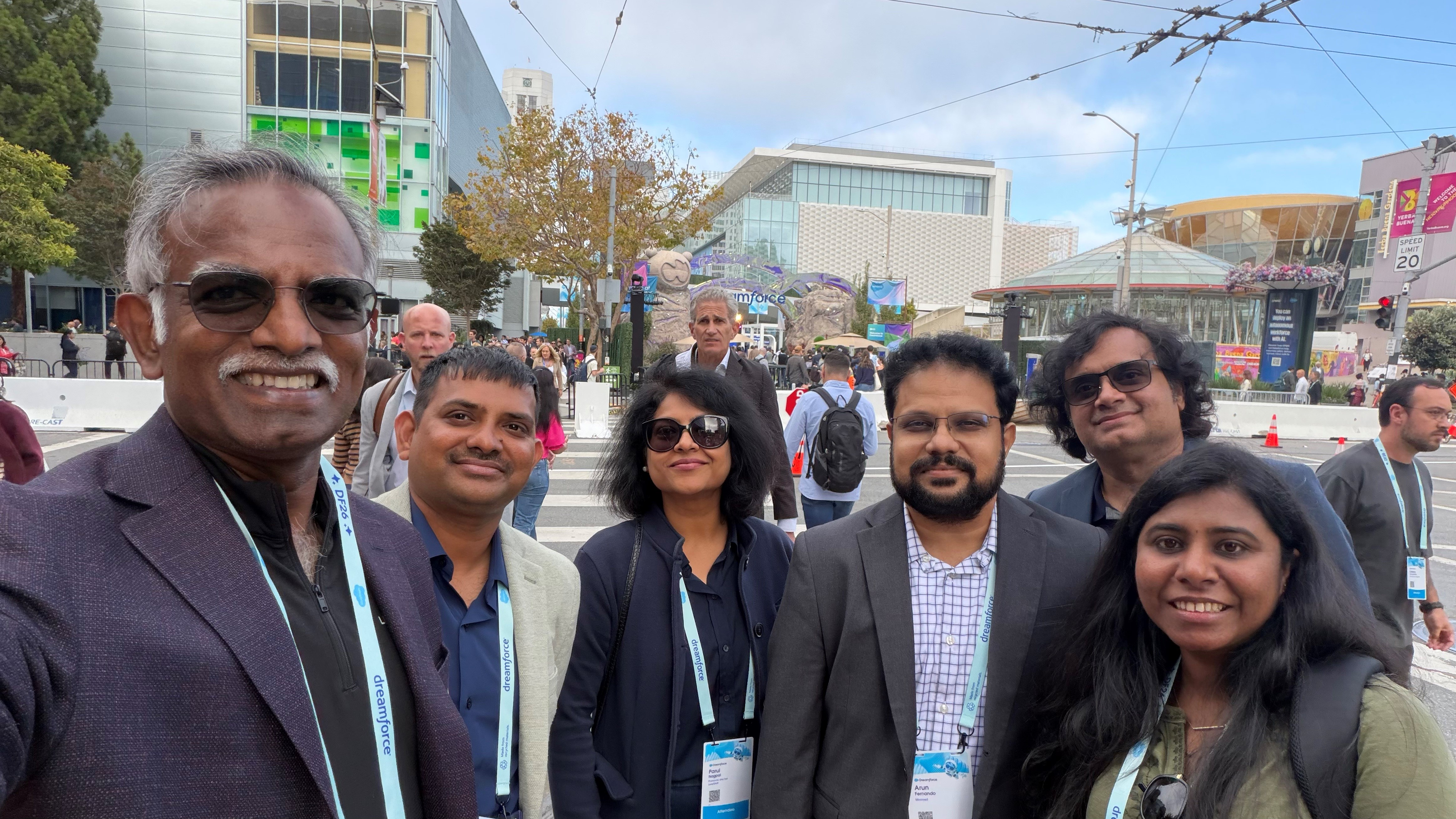
For LevelShift, Dreamforce was an opportunity to take these ideas beyond the keynote and into conversations with customers, partners, and Salesforce teams.
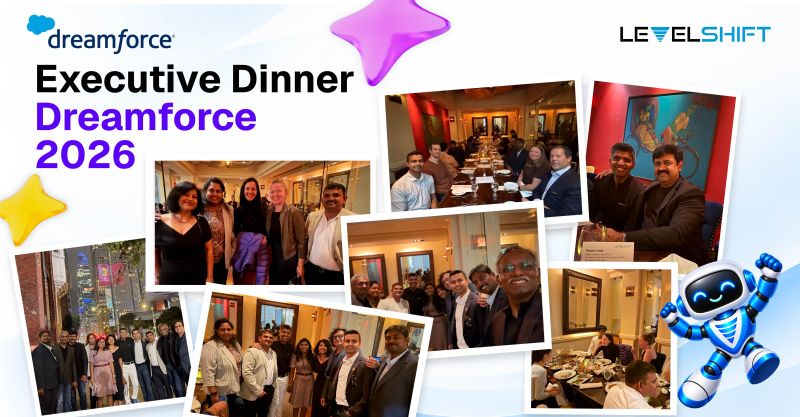
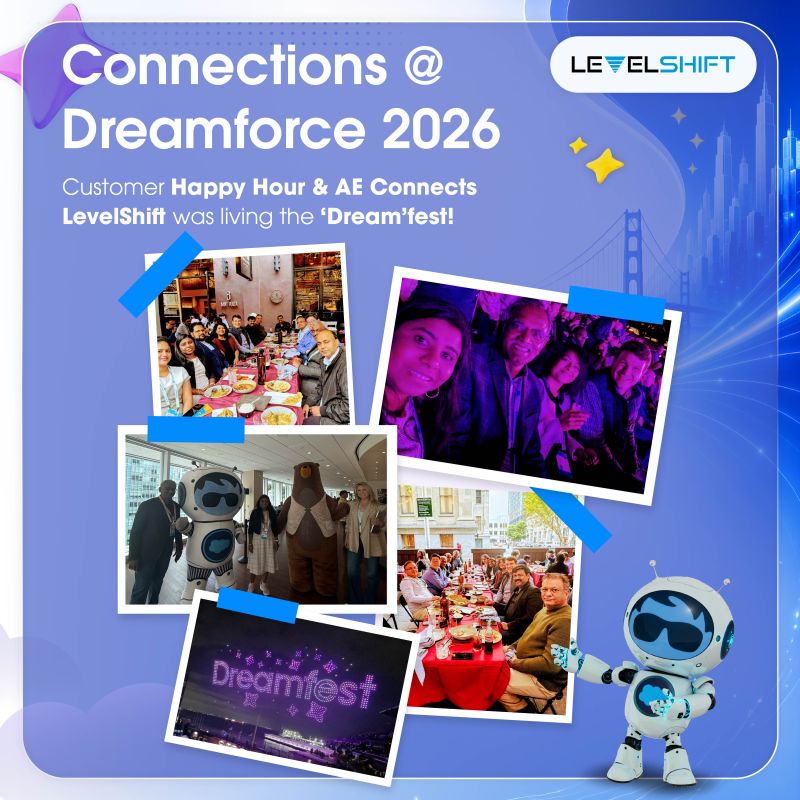
The week included an executive dinner, creating space for conversations around what comes next for AI and Salesforce away from the conference floor. A Customer Happy Hour brought customers and the LevelShift team together, turning conference conversations into deeper relationships.
The Customer Success team also met with a Salesforce Account Executive to discuss partnership alliances and sales roadmaps, connecting the broader AI conversation with practical business priorities.
The week concluded with Dreamfest, bringing together the people and partnerships behind the technology discussions.
These interactions added a practical dimension to the themes coming out of Dreamforce. As organizations explore Agentforce, AIforce, and the wider Salesforce AI ecosystem, the conversation is moving beyond what AI can do to where an agent should be deployed, what context it needs, what it should be allowed to do, and where people should remain involved.
For LevelShift, that is where the conversation moves from AI capability to AI transformation: connecting new Salesforce capabilities with an organization’s existing data, processes, systems, and business objectives.
Ready to explore what this could mean for your business? Contact us.

From AI Capability to Enterprise Action
Dreamforce 2026 presented a broader vision for enterprise AI.
AI models provide probabilistic reasoning. Enterprise platforms provide trusted data, business context, workflows, permissions, and controls. Agents connect these capabilities to perform defined work. And interfaces such as Slack allow that intelligence to reach people where they already work.
That makes the combination of AIforce, Claudeforce, Slackforce, Slack Code, and Agentforce particularly significant. The conversation is no longer simply about putting AI into an application. It is about embedding intelligence across the enterprise.
For organizations across Sales, Service, and Marketing, the opportunity is not simply to add more AI. It is to connect AI with the systems, processes, data, and people that already run the business.
And that may be the clearest takeaway from Dreamforce 2026: AI is moving from somewhere employees go to get answers to something increasingly woven into how work gets done.